Gameplans Alternative: Calm Sea vs Gameplans for Buyers Agents (2026)
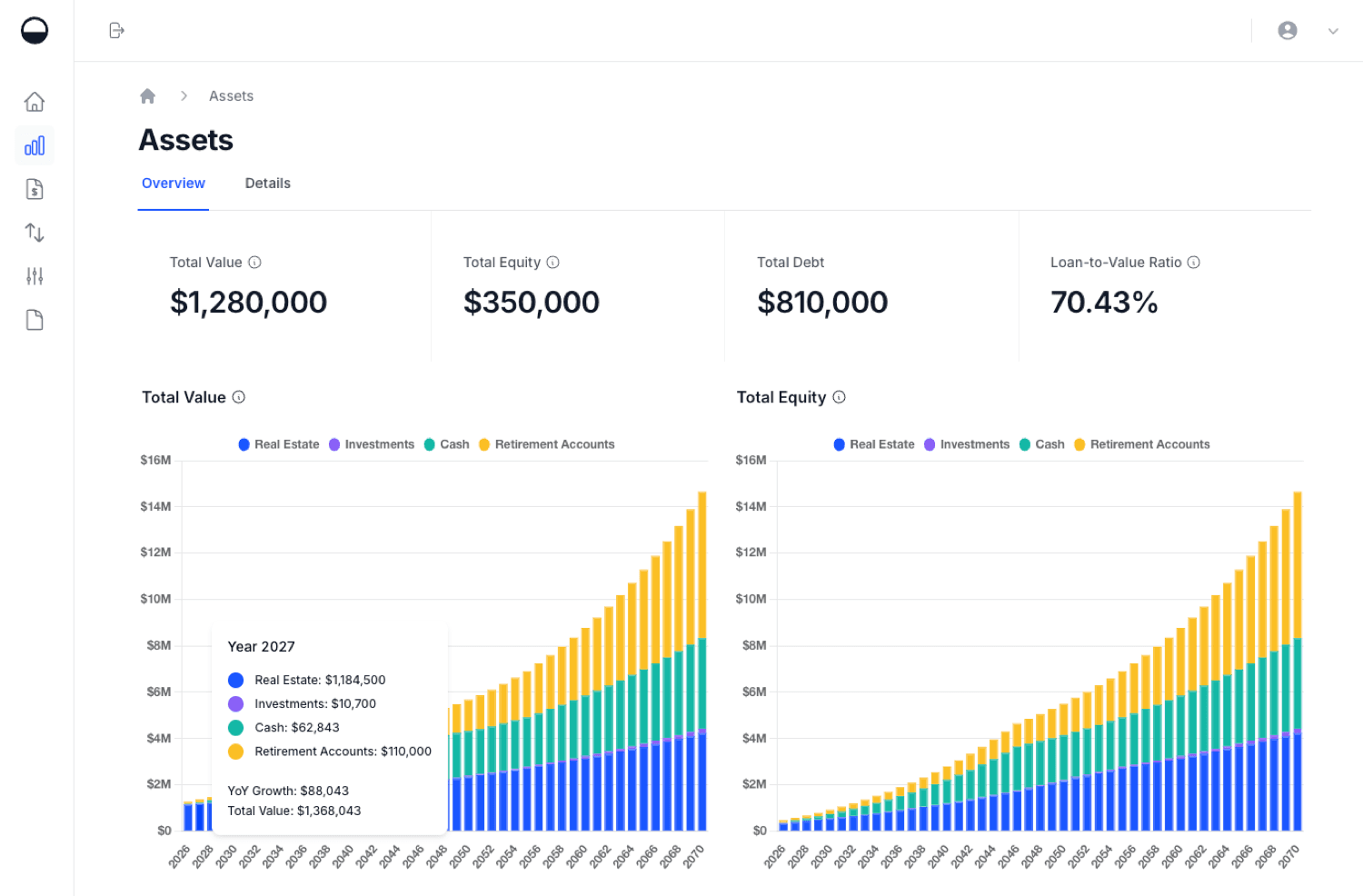
Table of Contents
- Quick answer
- Introduction
- What Gameplans Does
- Why Buyers Agents Look for a Gameplans Alternative
- Calm Sea vs Gameplans: Feature Comparison
- Where Gameplans Is the Stronger Choice
- Where Calm Sea Is the Stronger Choice
- Which Is Right for Your Practice?
- Frequently Asked Questions
Quick answer
The right Gameplans alternative depends on what you want the software to do for your clients. Gameplans is built for buyers agents who run structured property strategy sessions: it maps a client's purchase roadmap, compares strategies side by side and alerts you when a client has enough equity to buy again. Calm Sea suits agents and advisers who want clients to keep their own whole-of-wealth plan up to date, with property, loans, retirement drawdown and Monte Carlo simulation in one place, and an advisor portal to see every client's plan. Calm Sea's advisor portal is in a design partner programme, so it's an early-stage option rather than a like-for-like replacement today.
Gameplans details checked October 2026 on its own website. Gameplans doesn't publish prices or a full feature list, so we say where something isn't stated.
Introduction
Gameplans is an Australian platform for buyers agents. It describes itself as "the ultimate client retention platform for buyers agents", and it's built around one job: turning a client's finances into a visual property roadmap that shows what they can buy, when, and where it could take them over 30 years.
Plenty of agencies use it and like it. But there are good reasons to look at a Gameplans alternative. Some agents want clients to see more than their property plan. Some want published pricing before they apply. Others want a tool their clients will keep using between purchases, not only during a strategy session.
This guide compares Calm Sea and Gameplans on the points buyers agents ask about most: client projections, portal features, pricing and white-labelling. It's written by the Calm Sea team, so we've kept to facts we could check and we say plainly where Gameplans does more.
See the Calm Sea advisor portal
Book a short demo and we'll walk you through the client list, view-as-client and the plan your clients see. No obligation.
What Gameplans Does
Gameplans is a property strategy platform rather than a general financial planning tool. Its homepage describes these features:
- Client financial picture. Clients enter their complete financial position, which the site says gives the agent "instant clarity" on what the client can afford.
- Visual property roadmaps. Each client gets a purchase plan with timelines, rental projections and growth forecasts.
- Side-by-side scenarios. Agents compare strategies, such as commercial against residential property or different growth rates, and see a 30-year wealth trajectory update as the strategy changes.
- Equity alerts. The agent is notified when a client has built enough equity for another purchase.
- White-labelling. Clients see the agent's logo and colours rather than the Gameplans brand.
- Managed strategy sessions. The Gameplans strategy team can run a session for the agent's client, with the agent setting a markup on top of the fee.
- Support. Onboarding, training videos, email and video-call support, and a dedicated account manager.
Access is by application through the Gameplans partnerships page, and the site doesn't publish a platform fee. It positions the cost against what agents charge for a strategy session, which it puts at $2,000 to $5,000 or more. Gameplans says more than 600 buyers agents use it, and its reviews on Trustpilot come mostly from agencies that use it in client onboarding.
Why Buyers Agents Look for a Gameplans Alternative
Gameplans is well suited to what it was built for, so most reasons to look elsewhere come down to fit.
Clients' whole financial picture. A property roadmap answers "what can I buy next?". Many clients also want to know when they could stop working, how their retirement savings fit in, and whether their plan survives a run of bad markets. A tool that covers the whole balance sheet can keep those conversations in one place.
Engagement between purchases. A buyers agent's relationship often peaks around a purchase and goes quiet afterwards. A plan the client updates themselves gives a reason to come back, and gives you a current view of their position when they're ready for the next property.
Pricing you can see up front. Gameplans asks agencies to apply before discussing price. Some agents would rather compare costs before booking a call.
A second opinion on the numbers. A projection is only as good as its assumptions. Running a client's position through a second model is a reasonable check before a large purchase decision.
Calm Sea vs Gameplans: Feature Comparison
The table compares the two on what matters most when choosing a Gameplans alternative. "Not stated" means Gameplans' website doesn't mention it; it doesn't mean the feature is missing. "Planned" means the feature is part of Calm Sea's advisor portal, which is in a design partner programme and not generally available yet.
| Feature | Calm Sea | Gameplans |
|---|---|---|
| Built for | Clients and Buyers agents | Buyers agents |
| Property projections | Yes, equity and LVR | Yes, 30-year roadmap |
| Whole net worth | Yes | Client inputs finances |
| Retirement drawdown | Yes | No |
| Monte Carlo | Yes | No |
| Scenario comparison | Yes | Yes, side by side |
| Client self-service | Yes, own login | Clients enter data |
| Advisor client list | Yes | Not stated |
| View as client | Yes | Not stated |
| Equity alerts | Yes | Yes |
| White-labelling | Logo and colours | Logo and colours |
| Managed sessions | No | Yes, with markup |
| Advisor pricing | Per client (planned) | By application |
Where Gameplans Is the Stronger Choice
An honest comparison has to say where the other tool does more. For many buyers agents, Gameplans is ahead today.
Purpose-built for buyers agents
Everything in Gameplans is organised around the buyers agent workflow: a discovery call, a strategy session and a roadmap of purchases. Calm Sea is a general wealth planner with strong property features, so the roadmap framing isn't built in.
White-labelling and a done-for-you service
If you want clients to see only your brand, or want the Gameplans team to run strategy sessions for you while you set the margin, Gameplans offers both. Calm Sea doesn't offer managed sessions.
An established product
Gameplans has an established partner base, onboarding and an account manager. Calm Sea's advisor portal is new, and design partners are helping shape it.
Where Calm Sea Is the Stronger Choice
Calm Sea takes a different approach: the client owns a long-range plan of their whole net worth, and the advisor sees it.
The whole balance sheet, not just the next purchase
Clients add property, shares, cash, retirement savings, loans, income and expenses, each with a value and growth rate. Each property links to the mortgage secured against it, and the dashboards show value, equity, debt and loan-to-value ratio (LVR) over time. Our real estate guide walks through the setup.
Retirement drawdown and Monte Carlo
Calm Sea projects net worth forward while a client builds wealth, then models the drawdown phase: how savings and income could fund spending through retirement, year by year. A Monte Carlo simulation tests the plan across many randomised market scenarios, so a client can see how likely it is to hold up rather than relying on one growth rate. Clients can try the same idea in the free safe withdrawal rate calculator.
Clients keep their plan current
Because the plan belongs to the client, they update values whenever things change. That gives you a current position when they call about the next purchase, rather than figures from the last strategy session.
Which Is Right for Your Practice?
The choice comes down to what you want clients to get from the software.
Gameplans may suit you if your service centres on structured property strategy sessions, you want equity alerts and full white-labelling now, or you'd like a team to run sessions for you.
Calm Sea may suit you if you want clients to keep a whole-of-wealth plan that covers property, loans and retirement, you value seeing every client's current position in one list, and you're comfortable joining an early-stage product as a design partner.
Some practices may use both: a roadmap for the purchase conversation and a plan the client maintains afterwards. If you're weighing up how advisers add value more broadly, our guide to what a financial advisor does covers the main models.
Frequently Asked Questions
What is Gameplans?
Gameplans is an Australian property strategy platform for buyers agents. Clients enter their financial position, and the agent builds a visual roadmap of purchases with rental projections, growth forecasts and a 30-year wealth trajectory. It also offers equity alerts, white-labelling and managed strategy sessions.
How much does Gameplans cost?
Gameplans doesn't publish a price. Agencies apply through its partnerships page and discuss terms after that. Its site frames the cost against strategy session fees of $2,000 to $5,000 or more.
Is Calm Sea a direct replacement for Gameplans?
Not exactly. Calm Sea is a whole-of-wealth planner with property, loans, retirement drawdown and Monte Carlo simulation, plus an advisor portal in a design partner programme. It doesn't offer managed strategy sessions.
Can clients use Calm Sea without an advisor?
Yes. Anyone can sign up for Calm Sea. The Simple plan is free, and Everyday Users is $9 a month or $89 a year. When an advisor invites a client, the client approves access and can withdraw it later.
This article compares software products and is for general information only. It isn't financial advice. Gameplans details are taken from its public website in October 2026 and may have changed since.